Jobs and Issues
To open the job or issue list, click on Event and then Job List or Issues List:

A new display will appear:
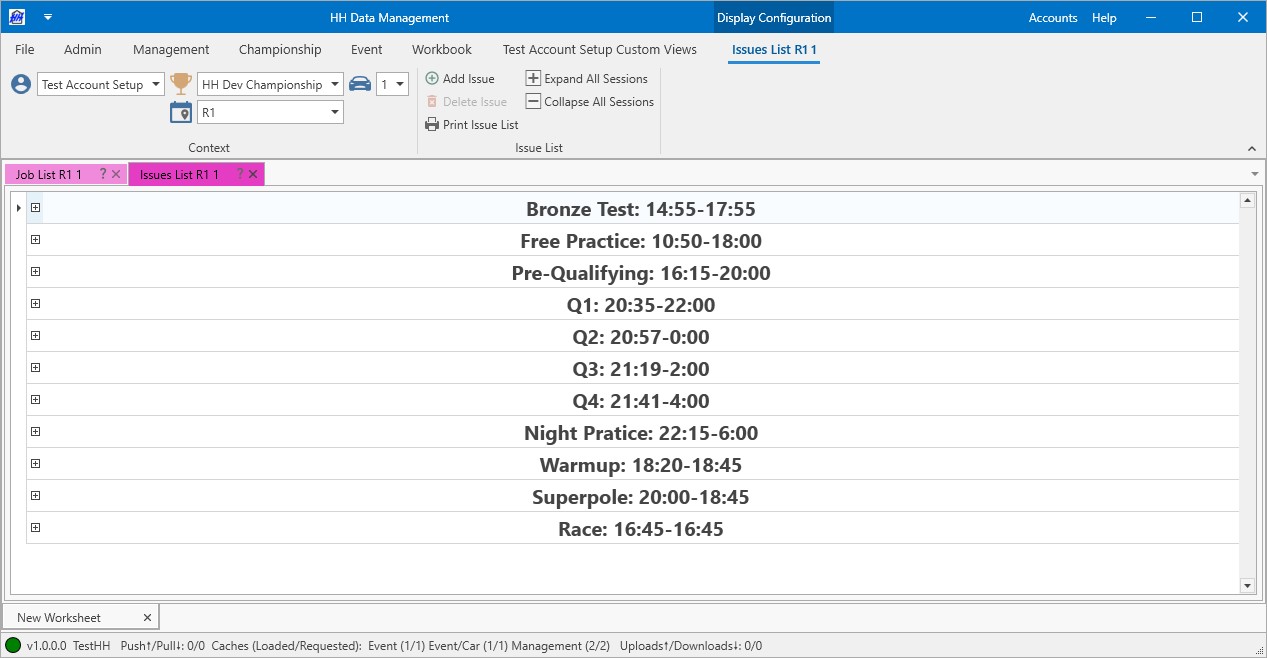
Job and issues list controls are depending on an event and a car. Then each job list or issue list is classified by sessions.
How to add an issue
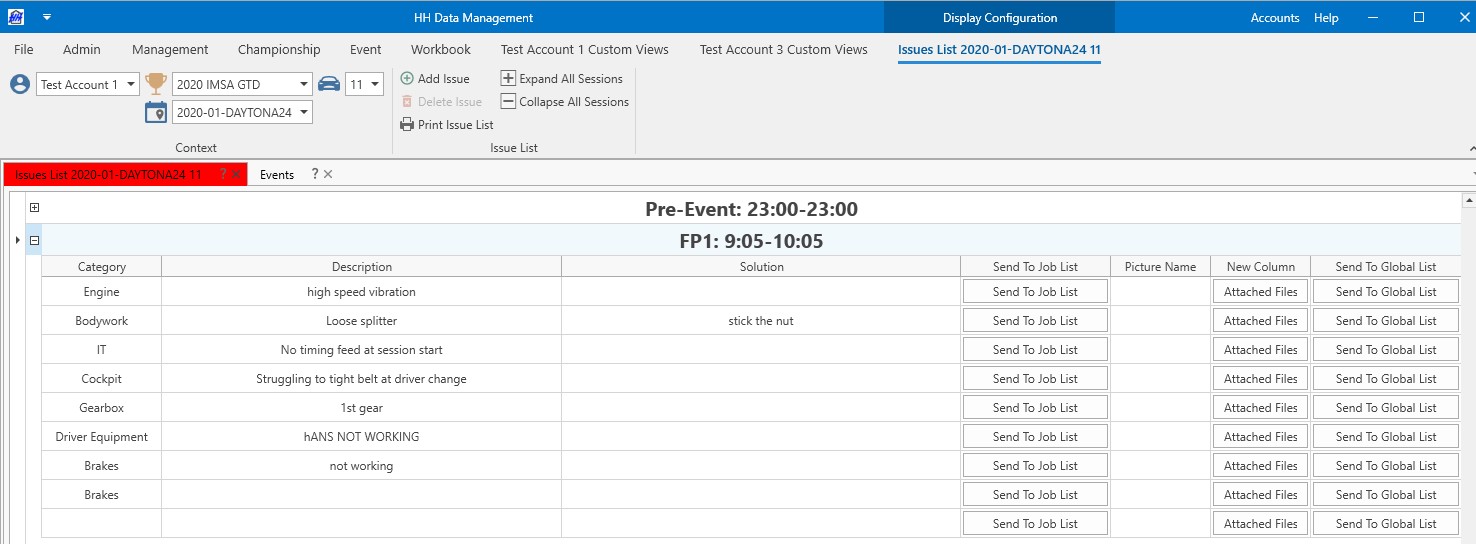
Select the session when you want to add a job list and issue list, then click on Add Issue to add a blank line.
Issue Parameters
- Category
- Description
- Solution
Send an issue to a job list
Select an issue and click Send to Job List to create a job from it. A Send Issue to Job List window appears, pre-filled with the issue data:
- Choose the Championship, Event, Car and Session that the job is added to. These default to the session the issue belongs to but can be changed to send the job to a different destination.
- Set the Job Category, Job Title and Comment for the new job.
- Use Assigned To to assign the job to a user. This defaults to the current user.
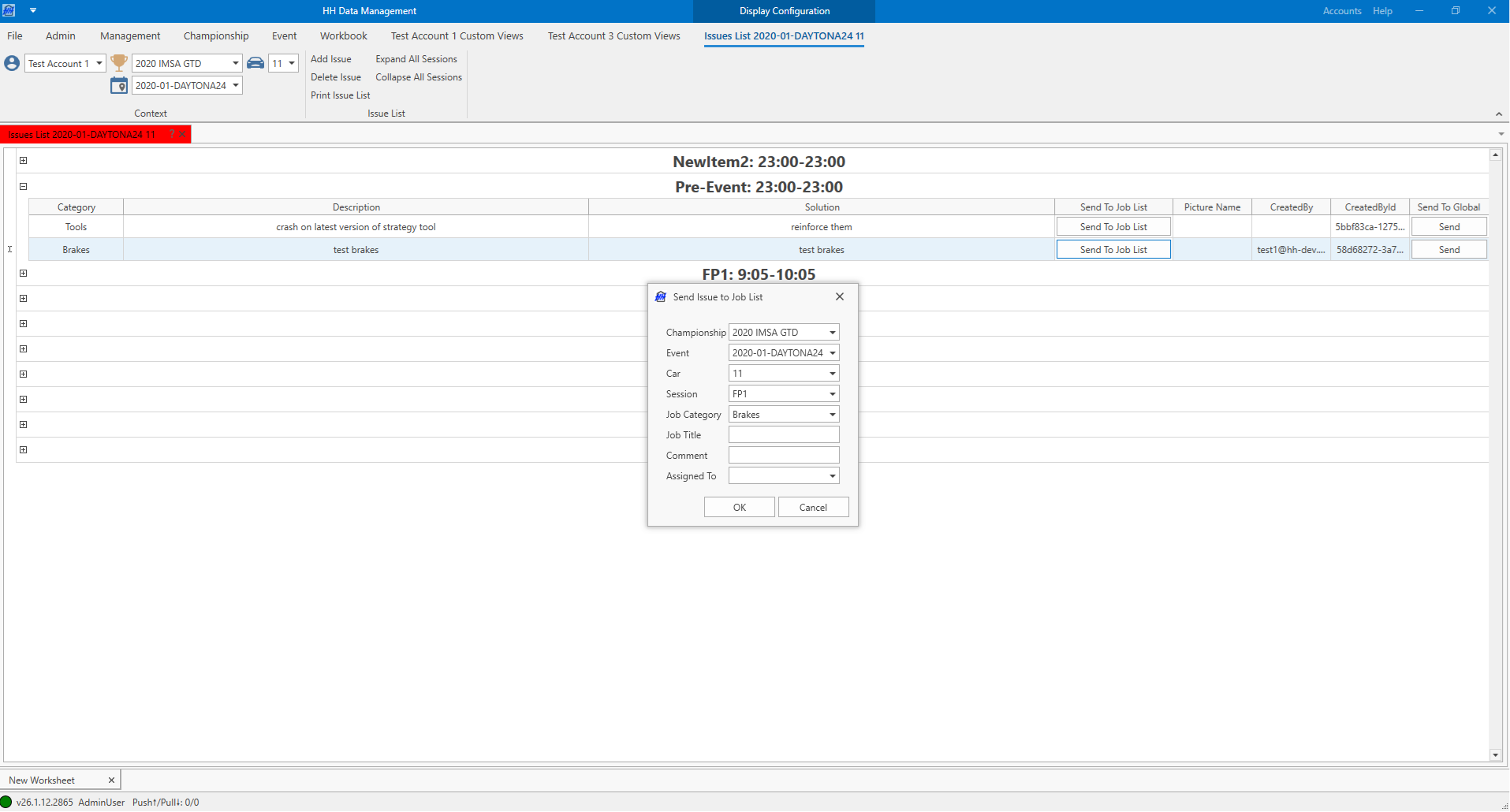
Click OK to create the job in the selected job list. Any edits made in the window take priority over the pre-filled values.
Property mapping
When the job is created, parameters are copied from the issue to the job:
- Parameters that have the same name on both the issue and the job are copied automatically. No configuration is required.
- Additional parameters can be copied by defining a mapping between issue parameters and job parameters (for example, copy the issue Solution into the job Comment). See Configure issue to job mapping below.
Entity tracking fields (such as Created By and Created Date) are never copied. The new job records the user who sent it as its creator.
Configure issue to job mapping
The mapping between issue parameters and job parameters is defined in the IssueToJobMapping collection on the account options. To set it up:
- Create a AccountOptionsCollection item definition named
IssueToJobMappingwith two Text parameters:IssueParameterNameandJobParameterName.

- On the Account Options definition, add a collection parameter named
IssueToJobMappingthat uses this definition. - Add a custom view and custom column profile to edit the
IssueToJobMappingcollection.
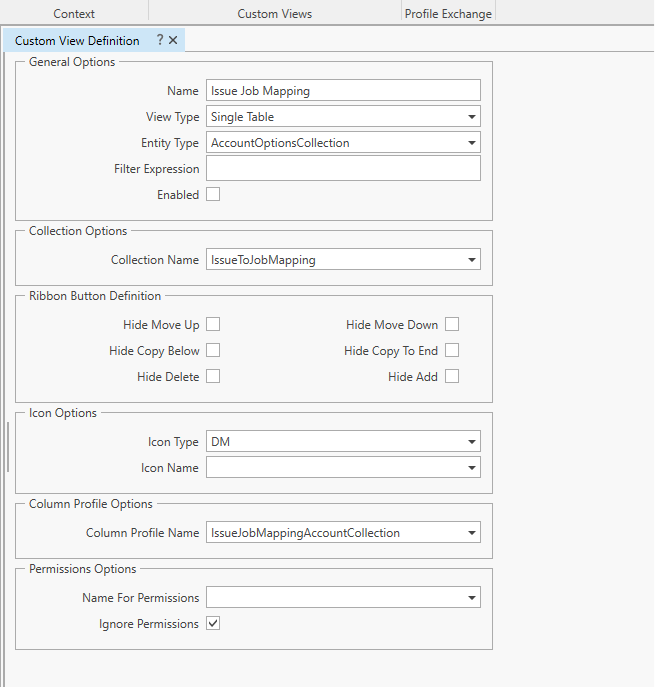
- In that view, add a row for each parameter to copy. Each row maps one issue parameter to the job parameter it is copied into. For example, map Solution to Comment.
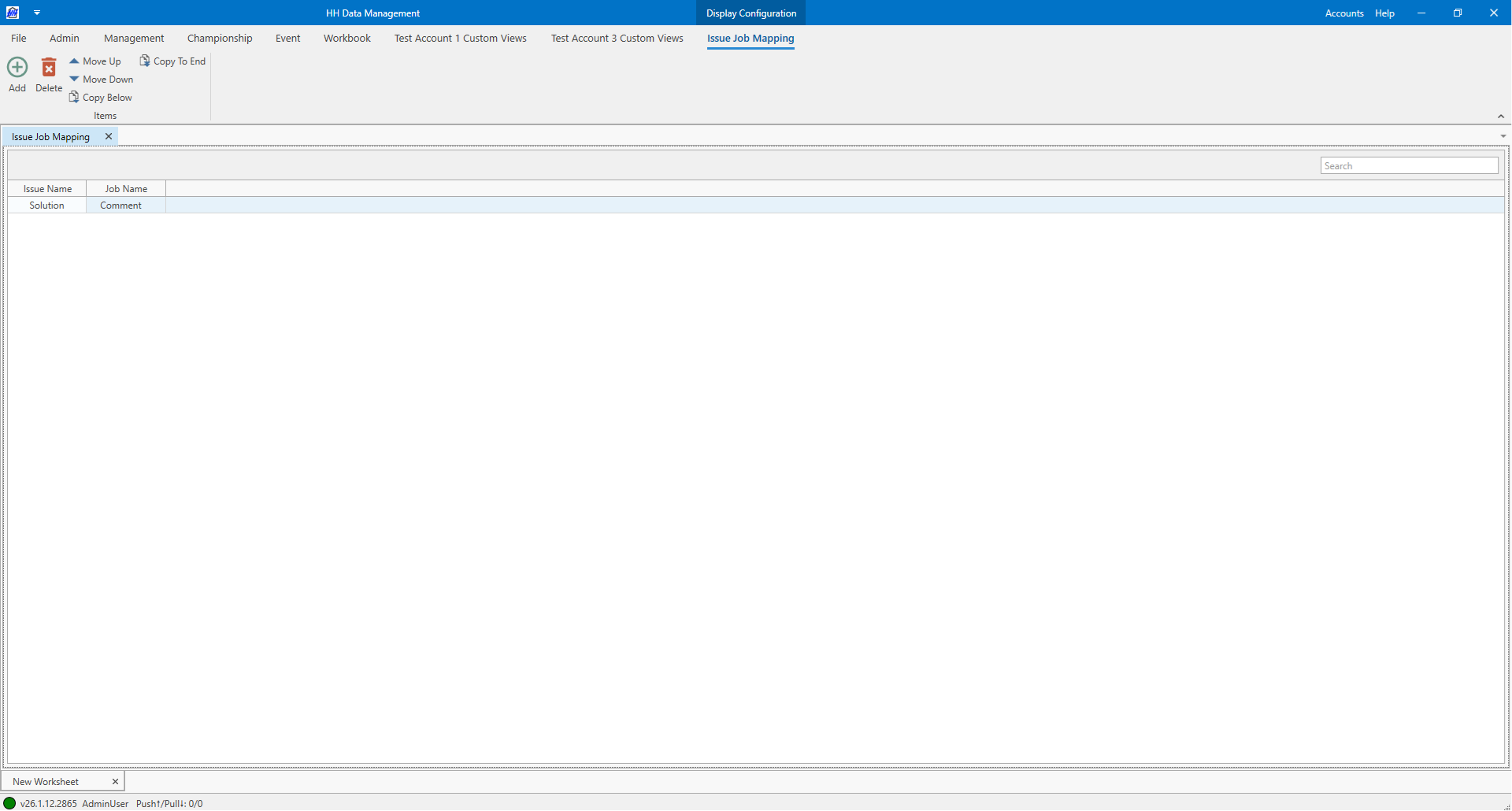
Mapping is optional. Parameters with matching names are always copied automatically, even when no mapping is configured.
Each issue parameter and each job parameter can be used only once in the mapping. If the mapping contains a duplicate issue or job parameter, a warning is shown and the issue is not sent until the mapping is corrected.
Track issues sent to a job list
Add a Boolean parameter named IsSentToJobList to the Session Object Issue definition to track which issues have been sent to a job list. When an issue is sent, this parameter is set automatically.
This parameter can then be used in the Style Options of a custom column profile to highlight sent issues with a background colour expression, for example on the Description column:
If(IsSentToJobList,"#FF0000","#00000000")
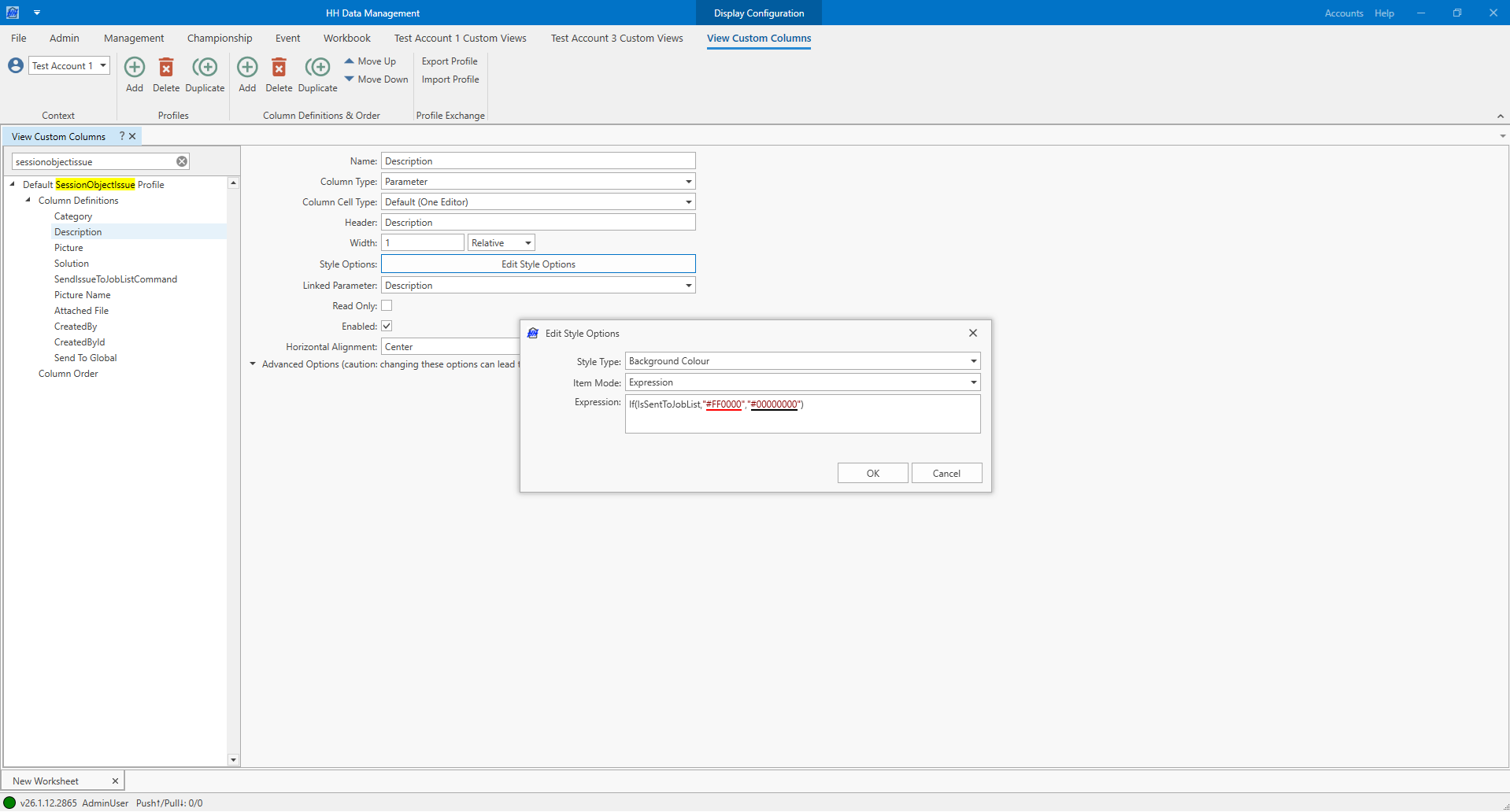
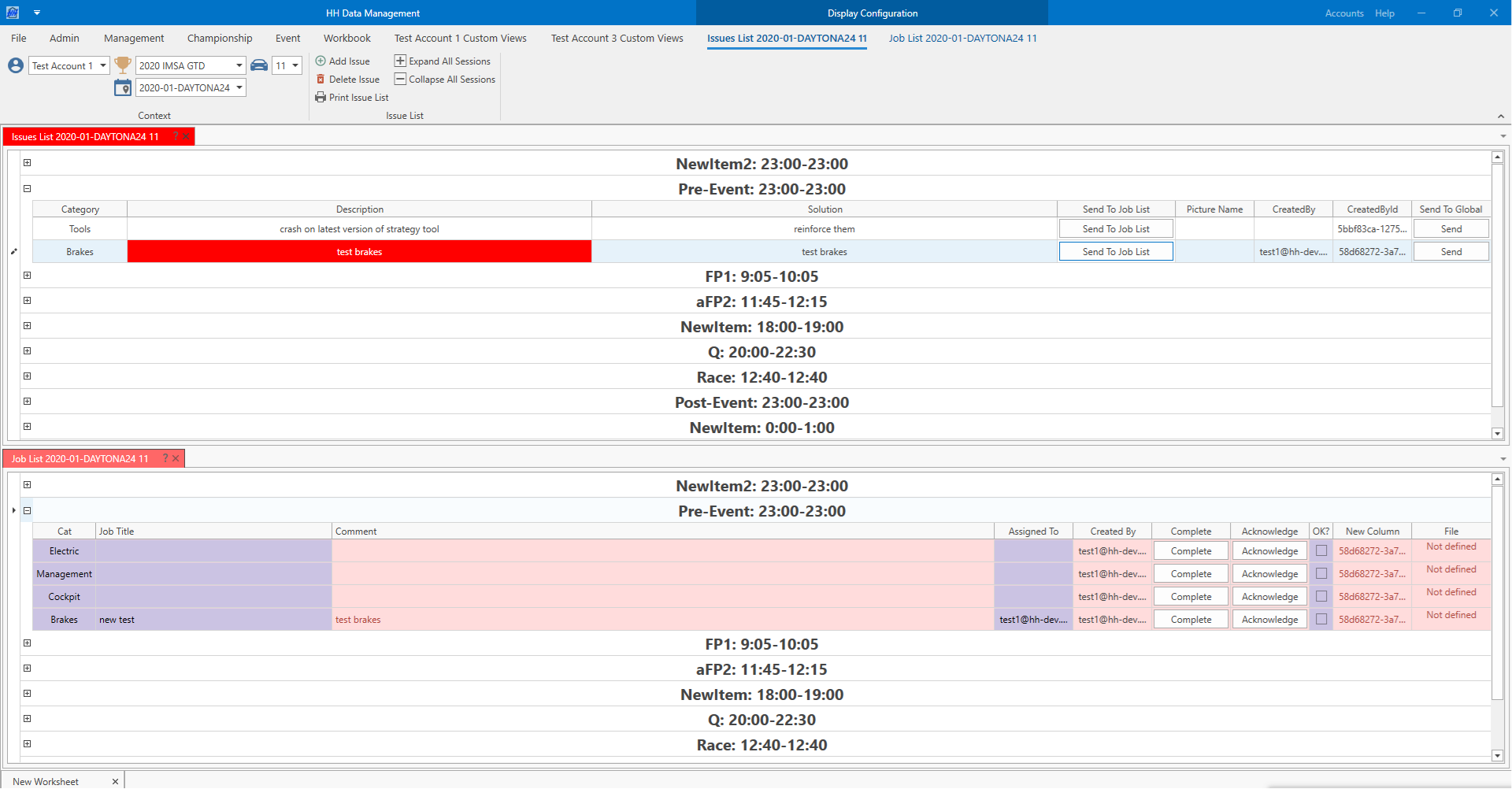
With this expression set, the description of an issue that has been sent to a job list is highlighted, and the new job appears in the job list:
How to add a job
- Add a blank row using Add Job
- Populate from template
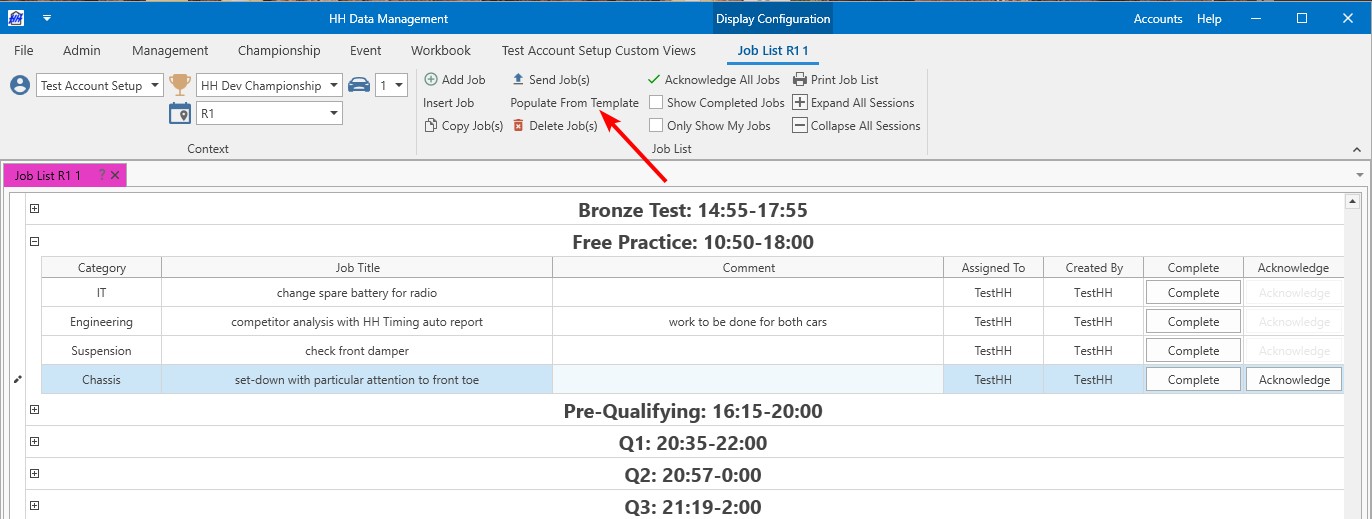
Job list templates can be defined in Management => Job List Templates.
Job parameters
- Category
- Job Title
- Comment
- Assigned to
- Complete button to Validate that the job is done
- Acknowledge button to validate you saw the job list
Completed jobs have a green background and non-acknowledge jobs have a red background.

Buttons are available to show or hide the completed jobs and to acknowledge all jobs or to show only jobs that are assigned to the current user.

How to delete a job or an issue
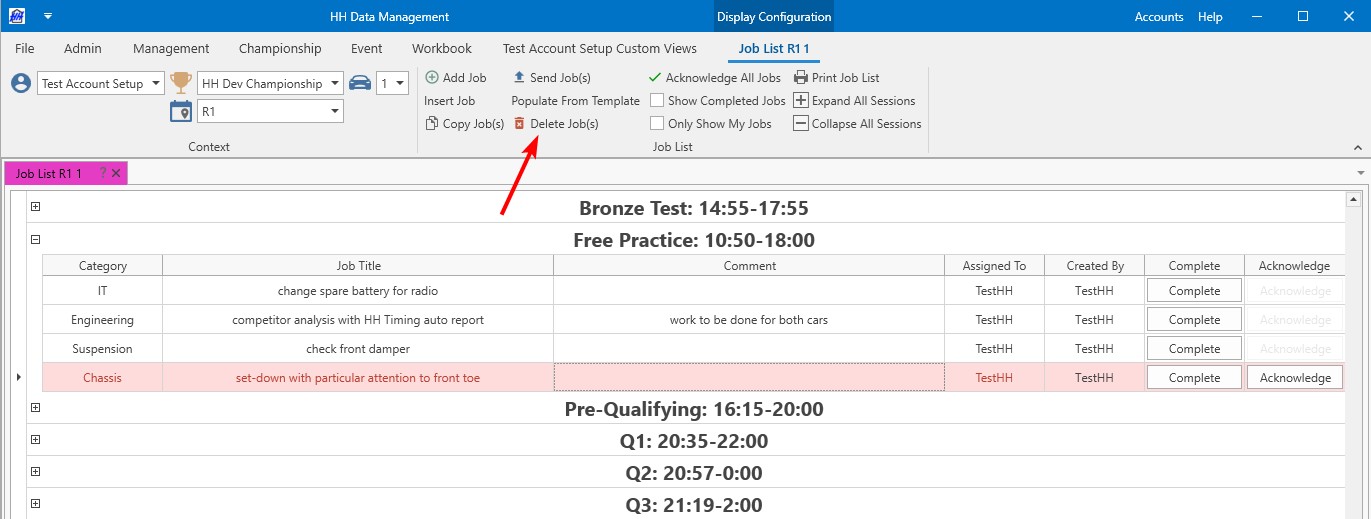
Select the job or the issue you want to delete and click on Delete Job or Delete Issue.
Print
Using the Print button in job list or issue list ribbon bar will save a pdf.
Customize title
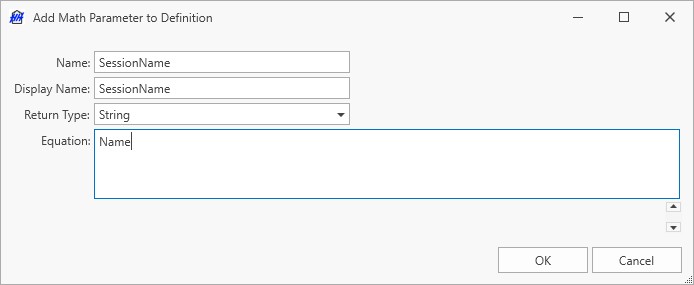
It's possible to customize the title of the sessions by creating a math parameter with the name SessionName in the Session definition.